
日光下駄 みやび
NIKKO GETA MIYABI
当工房について / ABOUT

『日光下駄 みやび』では、すべての工程を手作業で行っており、草履表も、天然竹皮を一本一本丁寧に編み上げて制作しています。
プレス機は使用せず、竹皮本来の風合いを活かしながら仕上げております。
編目や形にも手仕事ならではの表情が生まれ、自然な温もりを感じられる日光下駄となっています。
竹皮で編んだ草履表を下駄台に縫い付けた日光下駄は、夏は涼しく、冬は暖かい履き心地が特徴です。
吸水性と保温性を兼ね備えており、一年を通して心地よくお履きいただけます。
また、草履表がほどよいクッションとなり、長時間の歩行でも疲れにくく、足裏へやさしく馴染みます。
お着物や浴衣にはもちろん、普段のお洋服にも。
暮らしに寄り添う履物として、ぜひ日光下駄をお楽しみください。
At NIKKO GETA MIYABI, every step of the process is carried out by hand.
The zori surface is also carefully woven one strip at a time using natural bamboo skin.
No press machines are used in the finishing process, allowing the natural texture of the bamboo skin to remain intact.
Each pair reflects the character and warmth unique to handcrafted work, giving Nikko Geta their distinctive appearance and feel.
The woven bamboo zori surface is stitched directly onto the wooden geta base, creating footwear that feels cool in summer and warm in winter.
With both moisture absorption and heat retention, Nikko Geta can be worn comfortably throughout the year.
The cushioned zori surface also helps reduce fatigue during long walks while gently conforming to the shape of the foot.
Perfect not only for kimono and yukata, but also for everyday wear.
We invite you to enjoy Nikko Geta as traditional footwear that brings comfort and beauty to daily life.

草履の材料となる竹皮(竹の子の皮)
日光下駄の歴史 / History of Nikko Geta

During the Edo period, the shrines and temples of Nikko — including Nikko Toshogu Shrine, where Tokugawa Ieyasu is enshrined — placed great importance on formality and tradition. Various rules governed etiquette and attire when entering the sacred grounds.
One such rule required worshippers to change into purified straw sandals at the main gate before entering.
However, the temple grounds were filled with gravel paths, steep slopes, and heavy snowfall, making ordinary sandals extremely impractical.
To address this, a special type of geta was created by mounting the sandals onto wooden platforms.
Because these geta were permitted for entry into the temple grounds, they became known as “Gomen Geta,” meaning “authorized geta.”
During the Meiji period, Gomen Geta were refined into a more practical form, eventually evolving into what is now known as Nikko Geta.
Source: Hello Work for Becoming One of a Kind in Japan: Inheriting Traditional Crafts
Author: Gil Bart
Lightweight paulownia wood is used for the geta base, while the surface that touches the sole of the foot is covered with a woven bamboo-skin zori layer, carefully stitched to the base with hemp thread.
Nikko Geta are recognized as a traditional craft of Tochigi Prefecture.
江戸時代。
徳川家康公が祀られている日光東照宮をはじめ、日光の社寺では格式を重んじる風潮が強く、境内参入の作法や服装などにさまざまな決まりがありました。
参拝する人は表門で清めの草履に履きかえなければならない、というのはそのひとつです。
しかし、境内は砂利道や坂が多く、雪も多かったため、草履ではたいへん不便でした。
そこで、草履を乗せた下駄が考案されました。
この下駄であれば、境内参入を許されたことから「御免下駄」の名がつきました。
明治時代、御免下駄を実用向きに改良したものが、現在の日光下駄なのです。
出典:日本でオンリーワンになるためのハローワーク 伝統工芸を継ぐ
著者:ギル・バート
台木には軽さを求め桐が使われており、足の裏に当たる部分には竹皮で編んだ草履表が麻糸で台に縫い付けてある。
栃木県の伝統工芸品。

江戸時代から続く歴史を持つ「日光下駄」
製作者 / Artisan
03-min.jpg)
渡邉 誠友 (わたなべ せいゆう)
1983年生まれ
栃木県宇都宮市出身
作新学院高等学校 美術デザイン科卒
2014年4月 弟子入りし、日光下駄の制作を始める
2019年1月・6月 東武百貨店 大田原店 催事出店
2022年4月 アトリエギャラリー みやびオープン
2022年・2023年・2024年 日本橋三越本店 催事出店
その他、出店多数
【Creema】
https://www.creema.jp/c/nikkogeta-miyabi
【instagram】
2025年1月26日
BS12『久住昌之のニッポン箸休めさんぽ』にて日光下駄 みやびが紹介されました。

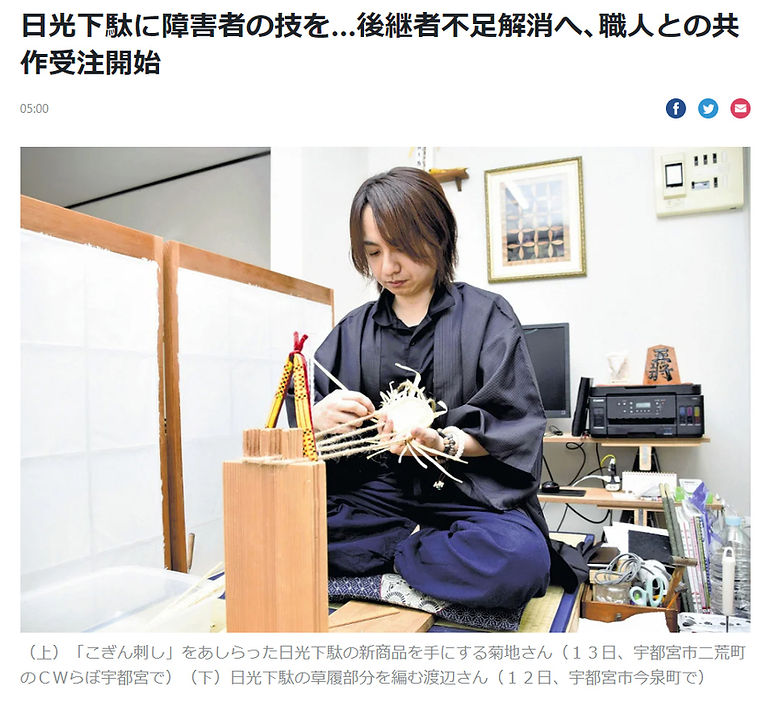
「CWらぼ宇都宮」さんとコラボした『こぎん刺し鼻緒の日光下駄』の記事が掲載されました。
https://www.yomiuri.co.jp/local/tochigi/news/20220414-OYTNT50242/
2020年8月6日
RADIO BERRY FM栃木にて紹介されました。

2019年6月7日
読売新聞にて紹介されました。
